
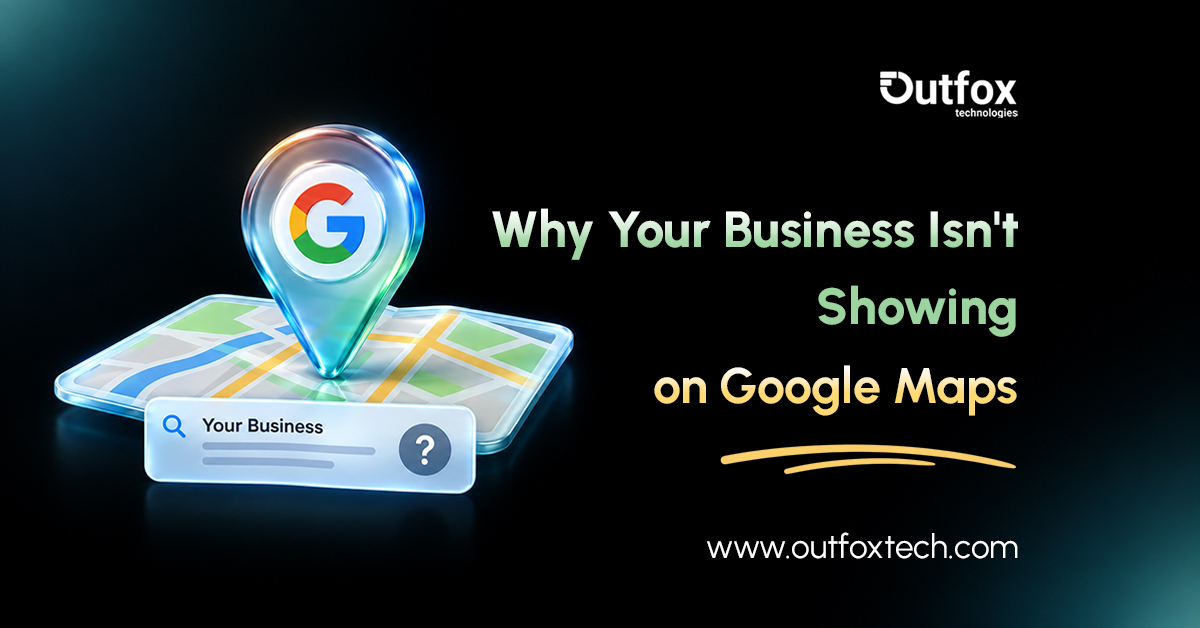
You search for your business on Google.
Nothing.
You might repeat the search slightly differently.
Yet you still see no results.
Nevertheless, whenever you search for a competitor, you immediately get access to their business location, including the photos, ratings, hours of operation, and directions.
If this sounds relatable, you might question whether you have a business on Google. Your Google Business Profile may just not be prominent enough in significant searches.
In most cases, showing up on Google Maps means that your local business is likely to be discovered easily. If customers are looking for local businesses, it means they are looking to contact or avail themselves of the services you offer.
So what is causing your business to not show up on Google Maps?
Let’s take a look at the reasons common to most businesses.
1. Your Google Business Profile Hasn’t Been Properly Set Up
The very first step is to determine if you have completed, claimed, and validated your Google Business Profile correctly.
An incomplete business profile only listing business name and a phone number presents little value to Google and potential customers.
Your profile should include all relevant information such as:
- Business name
- Primary business category
- Address or service area
- Phone number
- Website
- Business hours
- Business description
- Services
- Photos
This doesn’t mean you should fill every field with keywords.
The significance of accuracy cannot be overlooked while stuffing keywords in your profile.
If you have a bakery, you must ensure that your category and business description make it clear that you belong to the bakery industry. Mixing up business categories unrelated to your business merely because of search traffic creates confusion instead of value in the process.
2. Your Business Category May Be Wrong
This is one of the aspects that businesses tend to forget sometimes.
While creating a Google Business Profile for your business, you have to select the categories that best suit your type of business.
Your main category is the most significant because it gives Google an idea about the functionality of your business.
Suppose a user searches for:
“digital marketing agency near me.”
In the event that your profile has been assigned to the wrong category, this may mean that Google will be less confident in your business being linked with the search result.
However, this does not mean that you should select dozens of categories.
You need to opt for the category that best matches your primary business activity.
You can then add relevant secondary categories where appropriate.
3.Your Business Information Isn’t Consistent
Google looks at information about your business across the web.
If your business name, address or phone number appears differently across websites and directories, it can make your local information less consistent.
For example:
- Your website says one business address.
- A directory lists an old address.
- Another website uses a different phone number.
- Your Google profile contains something else.
These inconsistencies can create unnecessary confusion.
This is why local SEO services often include checking business listings and citations across relevant platforms.
The goal is simple:
Your business information should be accurate and consistent wherever customers can find it.
4. Your Profile Has Very Little Activity
Creating a profile and forgetting about it isn’t a strong local SEO strategy .
Look at your Google Maps listing from a customer’s perspective.
Would you trust a business with:
- Two old photos?
- No recent updates?
- Incomplete services?
- Few reviews?
- Outdated business information?
A more complete and actively maintained profile can provide a much better experience.
Businesses can regularly add relevant photos, update information, respond to reviews and keep their profile accurate.
This isn’t about posting something every day just to make the profile look busy.
It is about keeping useful business information current.
5. You May Lack Reviews.
There are two reasons for this!
Reviews change the way potential customers view your business.
More importantly, reviews help Google understand what is your business all about and how relevant it is locally.
However, you should not collect reviews by asking your customers to write false information or rewarding them for their opinions.
Instead, focus on giving your real customers some assistance in sharing their opinions with you.
If the customer is happy with your services, feel free to ask him or her to write an honest review.
And don’t stop your work even after you get the review – always reply to the reviews you receive, no matter if they are positive or negative.
By writing a good reply you will show that you pay attention to your customers.
6.Lack of Local Relevance
Imagine you own a Kochi-based digital marketing agency.
If someone is looking for digital marketing companies in Kochi, you want to pop up in the search results.
Just stating the word “Kochi” over and over again on your website is not going to get you there.
Google needs to see that your business, services, and location are related.
Your website must say it clearly:
- What your business does
- Which services you provide
- Where you operate
- Who you serve
This is where local SEO for businesses becomes important.
Instead of trying to rank for every location imaginable, focus on the areas that genuinely matter to your business.
7. Your Website and Google Profile Don’t Support Each Other
Your Google Maps presence shouldn’t exist separately from your website.
Think of them as two parts of the same local search journey.
Someone discovers your business through Google Maps.
They click your website.
Then they look at your services.
If the website is unclear, slow, outdated or doesn’t match the information on your Google profile, the customer may leave.
A properly optimized service page can also help Google understand what your business offers.
For example, if you provide website development, your website should have a useful page explaining your website development services , rather than relying only on the homepage.
8.You Are Targeting Highly Competitive Searches
There is another possibility: your profile may be working, but you are expecting it to rank for searches that are extremely competitive.
A new business might expect to appear immediately for a broad search such as:
“best digital marketing agency in Kerala.”
That is a much bigger challenge than appearing for a more specific local search.
Local search visibility usually needs time and consistent effort.
Instead of focusing only on broad keywords, businesses can also identify more specific searches that match their services and target market.
For example:
“SEO company in Kochi”
may be more commercially relevant to a Kochi-based agency than trying to compete immediately for every SEO-related search in Kerala.
9. Your Business May Be Outside the Searcher’s Immediate Area
Google Maps results can change depending on where the person searching is located.
This is important because a business owner might search from their office and see their listing, while a customer several kilometres away sees something different.
So don’t assume:
“I can see my business, therefore everyone can see it.”
Local search results are not identical for every person.
Location, relevance and competition can all influence what appears.
10. Your Profile May Have a Policy or Verification Issue
The issue could be something more fundamental.
Your profile might not have been validated successfully, may have been deactivated, or might not be direct according to Google’s established criteria.
Check your profile status in the instance where your business has disappeared from Google Maps suddenly, as it would help in identifying what may have gone wrong.
Don’t immediately create another listing.
That can make the situation more complicated, especially if you end up with duplicate profiles.
What Should You Do If Your Business Isn’t Showing?
Start with the basics.
Step 1: Check your Google Business Profile
Make sure it is claimed, verified and accurately represents your business.
Step 2: Review your category
Make sure your primary category genuinely describes your main business.
Step 3: Check your business information
Compare your name, address, phone number and website across your important online listings.
Step 4: Improve your profile
Add useful business information, services, photos and other relevant details.
Step 5: Build genuine reviews
Ask satisfied customers for honest feedback and respond to reviews professionally.
Step 6: Improve your website
Make sure your website clearly explains your services and locations.
Step 7: Work on local SEO
Build your local relevance through your website, Google profile, relevant citations, local content and other appropriate local SEO services.
Visibility on Google Maps Entails More Than Just Listing
Setting up your Google Business Profile is just the first step.
If your business is not being found during a search that potential customers make, it is not enough to simply say “add more keywords.”
Sometimes it could be because of an incomplete profile.
Other times it could be due to a wrong category.
Sometimes your local information is inconsistent.
Sometimes your website doesn’t clearly support your business location and services.
At times, competitors might have a comparative advantage when it comes to visibility in the local area.
Nonetheless, several of the difficulties identified can be handled easily.
In the case of businesses operating in Kerala, creating a stellar presence on Google Maps is part of the overall local SEO approach and not an isolated one.
At Outfox, our mission is to ensure that our clients can be easily found by their potential customers. This means that one needs to ensure that Google Business Profile, website, localized content, and the general online visibility are well optimized.
Because while just getting onto Google Maps is one thing.
Ensuring visibility in Google Search (AEO) is what’s actually important.