

A business needs a video. Maybe it is a new product launch. Maybe a festival offer needs to go live in three days. Or perhaps the business has been posting regularly but needs better social media video content. Then comes the question: Should we create it using AI or arrange a traditional video shoot? It sounds like a simple choice. In reality, it is not. After looking at how businesses use video for different purposes, one thing becomes clear: AI video production and traditional video production solve different problems. The better option depends on what the business wants the audience to see, feel and understand. Sometimes, the biggest problem is simply time A business has a weekend offer ready to go, but the promotional video needs to be created quickly. There is no time to find a location, arrange a crew, organise lighting, shoot multiple scenes and wait for the final edit. AI video creation can be a practical option in situations like this. A concept can be developed quickly. Visuals can be generated or adapted. Voiceovers, animations and different versions can be explored without arranging an entirely new shoot for every idea. For businesses that need frequent content, this can make a big difference. But there is an important catch. Fast production does not automatically mean good content. A video can be produced in minutes and still fail to communicate anything useful. The idea, script, visual direction and understanding of the audience still matter. Then there are products that need to be seen for real Now consider a different situation. A restaurant is introducing a new menu and wants to turn it into engaging video content. A clothing store has launched a new collection. A jewellery business wants to show the details of a new design. A hotel wants potential customers to see its rooms. Here, real footage has an obvious advantage. Customers can see the actual product, location, people and details. Traditional video production still has an important place when real visuals matter. A camera records real people, places, products, and moments as they happen. And sometimes, that is exactly what the audience wants. They don’t need an imagined restaurant. They want to see your restaurant. They don’t need an AI-generated product. Before making a purchase, customers often want to see the product as it actually looks. The human side of video is difficult to replace There is another area where traditional production can make a strong difference: people. For example, a founder could share the story behind starting the business. A customer sharing their experience. An employee could demonstrate how the product is made or how it works. A chef preparing a signature dish. These moments have small imperfections, expressions and natural interactions. Those details can make a video feel real. That does not mean AI cannot create human-looking content. It can. But businesses should ask whether artificial realism is actually helping their message. For a technology explainer, it may work perfectly. For a customer testimonial, showing the actual customer may be far more convincing. AI video is not necessarily the cheaper option This is another assumption worth questioning. It is easy to think: AI = cheap. Traditional production = expensive. That is not always true. The cost depends on what needs to be produced. A simple AI-generated social media video may require fewer resources than a professional shoot. But a complex AI production involving multiple revisions, visual generation, voiceovers, editing and corrections can also take considerable creative effort. At the same time, a simple traditional shoot can sometimes be straightforward and efficient. So instead of asking: “Which one costs less?” A better question is: “Which approach gives us the right result for this particular video?” That makes the decision much more practical for the business. What about social media? This is where things become interesting. Businesses today don’t necessarily need one big video every few months. They need content continuously. Instagram Reels. Short promotional videos. Educational videos. Product videos. Festival campaigns. Paid ad creatives. Quick announcements. Different versions for different audiences. Creating every piece through a complete traditional shoot can become difficult. AI video creation for businesses can make the overall content production process faster and more flexible. AI can help businesses explore more ideas and produce certain types of content faster. But traditional footage can still provide the original brand material. The two approaches don’t have to compete. They can support each other. A better approach may be AI + traditional video Imagine a business conducts one professional product shoot. Instead of creating one video and stopping there, that footage can become the foundation for several pieces of content. The original shoot provides authentic product visuals. Editing creates short-form videos. AI can then support additional concepts, animations, variations or supporting content. Suddenly, one production can contribute to a larger video marketing strategy. This is where AI becomes more interesting. It does not necessarily have to replace the camera. It also allows businesses to make better use of the photos, footage, and other content they already have. So, when should you choose AI? AI video production can be a good option when: You need content quickly You want to test multiple creative ideas You need frequent social media content The video does not depend heavily on real-world footage You need different versions of an advertisement Animation or generated visuals suit the concept You want to scale your content production For example, an educational technology company could use AI to explain a complicated software feature through animation rather than organising a physical shoot every time. That can be practical and effective. And when should you choose traditional production? Traditional video production can be the better choice when: Your actual product needs to be shown Your location is part of the experience People are central to the story You need customer testimonials You are creating a brandfilm You want authentic product photography and video The physical experience is important to the audience For a restaurant, resort, fashionbrand,

You search for your business on Google. Nothing. You might repeat the search slightly differently. Yet you still see no results. Nevertheless, whenever you search for a competitor, you immediately get access to their business location, including the photos, ratings, hours of operation, and directions. If this sounds relatable, you might question whether you have a business on Google. Your Google Business Profile may just not be prominent enough in significant searches. In most cases, showing up on Google Maps means that your local business is likely to be discovered easily. If customers are looking for local businesses, it means they are looking to contact or avail themselves of the services you offer. So what is causing your business to not show up on Google Maps? Let’s take a look at the reasons common to most businesses. 1. Your Google Business Profile Hasn’t Been Properly Set Up The very first step is to determine if you have completed, claimed, and validated your Google Business Profile correctly. An incomplete business profile only listing business name and a phone number presents little value to Google and potential customers. Your profile should include all relevant information such as: Business name Primary business category Address or service area Phone number Website Business hours Business description Services Photos This doesn’t mean you should fill every field with keywords. The significance of accuracy cannot be overlooked while stuffing keywords in your profile. If you have a bakery, you must ensure that your category and business description make it clear that you belong to the bakery industry. Mixing up business categories unrelated to your business merely because of search traffic creates confusion instead of value in the process. 2. Your Business Category May Be Wrong This is one of the aspects that businesses tend to forget sometimes. While creating a Google Business Profile for your business, you have to select the categories that best suit your type of business. Your main category is the most significant because it gives Google an idea about the functionality of your business. Suppose a user searches for: “digital marketing agency near me.” In the event that your profile has been assigned to the wrong category, this may mean that Google will be less confident in your business being linked with the search result. However, this does not mean that you should select dozens of categories. You need to opt for the category that best matches your primary business activity. You can then add relevant secondary categories where appropriate. 3.Your Business Information Isn’t Consistent Google looks at information about your business across the web. If your business name, address or phone number appears differently across websites and directories, it can make your local information less consistent. For example: Your website says one business address. A directory lists an old address. Another website uses a different phone number. Your Google profile contains something else. These inconsistencies can create unnecessary confusion. This is why local SEO services often include checking business listings and citations across relevant platforms. The goal is simple: Your business information should be accurate and consistent wherever customers can find it. 4. Your Profile Has Very Little Activity Creating a profile and forgetting about it isn’t a strong local SEO strategy . Look at your Google Maps listing from a customer’s perspective. Would you trust a business with: Two old photos? No recent updates? Incomplete services? Few reviews? Outdated business information? A more complete and actively maintained profile can provide a much better experience. Businesses can regularly add relevant photos, update information, respond to reviews and keep their profile accurate. This isn’t about posting something every day just to make the profile look busy. It is about keeping useful business information current. 5. You May Lack Reviews. There are two reasons for this! Reviews change the way potential customers view your business. More importantly, reviews help Google understand what is your business all about and how relevant it is locally. However, you should not collect reviews by asking your customers to write false information or rewarding them for their opinions. Instead, focus on giving your real customers some assistance in sharing their opinions with you. If the customer is happy with your services, feel free to ask him or her to write an honest review. And don’t stop your work even after you get the review – always reply to the reviews you receive, no matter if they are positive or negative. By writing a good reply you will show that you pay attention to your customers. 6.Lack of Local Relevance Imagine you own a Kochi-based digital marketing agency. If someone is looking for digital marketing companies in Kochi, you want to pop up in the search results. Just stating the word “Kochi” over and over again on your website is not going to get you there. Google needs to see that your business, services, and location are related. Your website must say it clearly: What your business does Which services you provide Where you operate Who you serve This is where local SEO for businesses becomes important. Instead of trying to rank for every location imaginable, focus on the areas that genuinely matter to your business. 7. Your Website and Google Profile Don’t Support Each Other Your Google Maps presence shouldn’t exist separately from your website. Think of them as two parts of the same local search journey. Someone discovers your business through Google Maps. They click your website. Then they look at your services. If the website is unclear, slow, outdated or doesn’t match the information on your Google profile, the customer may leave. A properly optimized service page can also help Google understand what your business offers. For example, if you provide website development, your website should have a useful page explaining your website development services , rather than relying only on the homepage. 8.You Are Targeting Highly Competitive Searches There is another possibility: your profile may be working, but you are expecting it to rank for
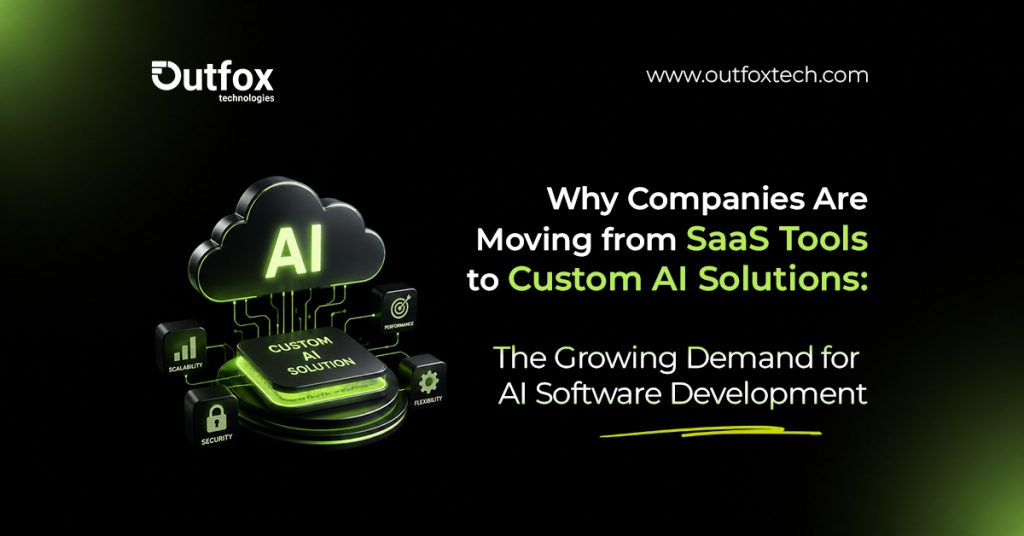
For almost ten years, SaaS platforms have been the answer to many modern business challenges, helping organizations improve operations, enhance collaboration, and reduce software costs. However, as business requirements become more complex, many companies are turning to AI software development services to create customized solutions that better fit their processes, customers, and long-term goals However, the requirements are changing, and, due to this factor and growing competition, many firms have begun to understand that general software cannot do everything for them. Modern organizations tend to invest in custom AI software development services, which would allow for creating tailor-made solutions for them, their customers, and specific work-related processes. It does not mean that businesses no longer need SaaS platforms; however, they require more flexible, automated, and effective approaches to solving different kinds of challenges. How AI Software Development Services Are Replacing Traditional SaaS Limitations The SaaS applications are built to cater to a wide audience. In order to attract thousands of consumers, they provide generic functionality and workflow options that function effectively for the majority of companies. However, the problem comes when the business requires something that goes beyond the scope of the application. Such scenarios include instances where firms: Restricted customization options Expensive subscription upgrades Complex integrations Feature overload Vendor dependency These constraints may lead to inefficient innovations and operations. Custom artificial intelligence solutions overcome such problems since they help companies to develop software according to their own needs. This means that they will be able to create their own systems according to their processes and needs rather than adjust to some pre-designed software package. This is the reason why there has been an increased interest in AI business automation solutions. The Rise of Personalized Business Automation The scope of automation goes beyond mundane activities. With contemporary AI technology, large amounts of information can be processed, analyzed, predicted upon, and used in decision making immediately. Companies utilize AI for: Customer service Sales forecasting Lead generation Inventories Fraud prevention Content creation Reporting While traditional SaaS applications come with automated capabilities, their use is rather universal, targeted at general masses. However, custom-built AI technology has a completely new benefit to offer. It will be based on specific company information and can be adjusted for meeting specific business goals. Firms that employ machine learning development services receive a chance to develop intelligent machines that will grow and improve themselves automatically. Competitive Advantage Through Customization One of the main challenges with the dependency on the services of SaaS providers is the fact that the competition is utilizing the same resources. If both you and your competitor have access to the exact same technology, how will you differentiate yourself? AI-based technology enables enterprises to create unique capabilities. For example: A logistics company can create predictive delivery systems. A healthcare provider can build personalized patient engagement platforms. An e-commerce brand can develop AI-powered recommendation engines. A financial institution can implement advanced fraud detection models. Such unique capabilities can be turned into strategic strengths for growth and innovation. Within the scope of more comprehensive digital transformation services, companies are increasingly focusing on AI projects that can deliver clear business benefits without completely relying on generic platforms. Better Integration Across Business Systems There are different software programs used by modern companies across various departments. The sales department uses CRM software, the financial department uses accounting software, the marketing department uses marketing automation software, and the operations department uses management software. It usually involves a number of processes for making these programs communicate together. AI-based technology solutions can function as a common intelligence layer that brings all these tools together and makes it possible to automate business processes. Companies that invest in custom web application development are likely to choose an AI-enabled platform. This results in: Improved efficiency Faster decision-making Better collaboration Enhanced customer experiences Rather than juggling multiple disconnected platforms, organizations gain a cohesive technology ecosystem designed specifically for their operations. Scalability Without SaaS Restrictions Pricing is generally tiered in SaaS products. With business growth, the subscription price is likely to skyrocket. It is because of increased needs regarding the number of users, more sophisticated functionality, extra storage, and additional integrations. Although at first glance SaaS might look like an affordable solution, in the future, it could prove to be quite costly. The use of custom AI solutions gives more flexibility when it comes to scaling the company.Scalable app development allows growth in any direction without being limited by the vendor. The Growing Importance of Data Ownership One of the most significant company assets nowadays is data. Businesses produce enormous volumes of data about their clients, operations, goods, and consumer behavior. Vendor-controlled environments are used by many SaaS platforms to hold vital corporate data. Some corporations may find this arrangement acceptable, but others may like more control over the management and use of their data. Businesses can retain custody of their data while utilizing sophisticated analytics and automation features with custom AI systems. For sectors with stringent compliance regulations, security issues, or proprietary business procedures, this is especially crucial. Organizations can establish secure environments that meet their operational and governance needs by integrating AI capabilities with dependable cloud hosting and managed hosting services. Enhancing Customer Experiences with AI Customer expectations continue to evolve. People expect faster responses, personalized recommendations, seamless interactions, and proactive support. Meeting these expectations using generic software can be challenging. Custom AI solutions help businesses create personalized customer experiences by analyzing behavior, preferences, and historical interactions. Organizations are increasingly integrating AI into: Customer portals Mobile applications Support systems Marketing platforms E-commerce experiences Through web application development, enterprise mobile app development, and cross platform mobile app development, businesses can deliver AI-driven experiences that strengthen customer engagement and loyalty. Why SaaS Is Not Disappearing SaaS is not going out of style, even as AI-powered custom solutions are becoming more and more popular. In reality, a lot of businesses still use SaaS tools for essential company operations. The way companies approach technology strategy is actually changing. Businesses
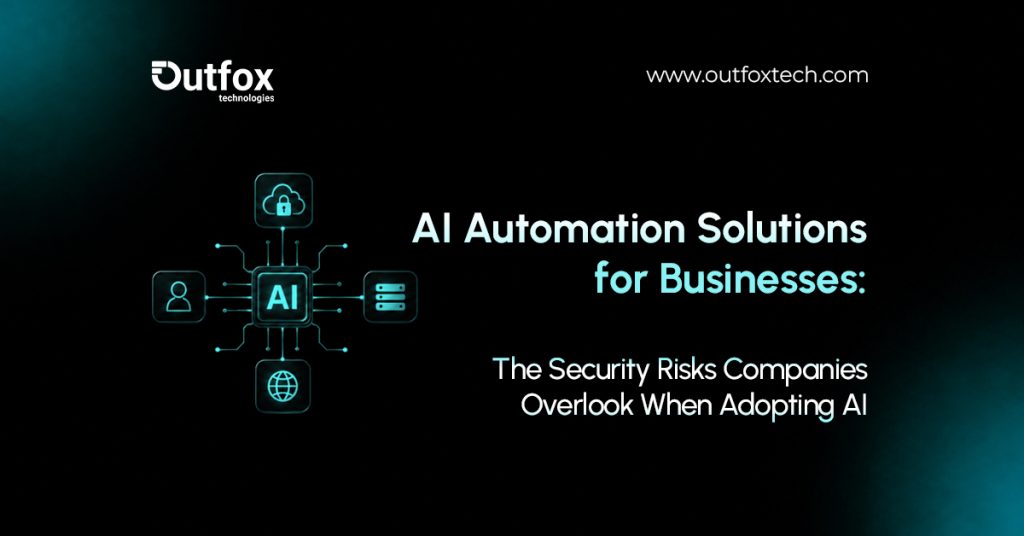
Artificial intelligence is developing into a key part of the modern day corporate environment at a fast pace. With the help of various capabilities like bots, predictive analysis, automation of processes, and more, AI is changing the way companies work. Some examples of areas that companies aim to achieve through AI automation solutions for businesses include efficiency, innovation, and reduction of costs. Nevertheless, an important aspect of implementing AI that is often neglected by most companies is the aspect of security. The implementation of AI can be beneficial for businesses, although it can also pose several threats which might not have been accounted for by existing cybersecurity systems. The urgency to implement artificial intelligence systems can lead companies to ignore the potential threats in their system.. Security Risks in AI Automation Solutions for Businesses Conventional software programs follow predetermined guidelines and frameworks. In contrast, AI systems constantly learn from data, communicate with other sources, and use sophisticated models to inform their decisions. A greater assault surface is produced by this dynamic nature. Businesses that engage in AI software development services frequently place a strong emphasis on performance and usefulness. When businesses are under pressure to release AI-driven products as soon as possible, security concerns could be viewed as secondary issues. Sensitive company data, client information, and private intellectual property may be exposed to hazards in this ecosystem that were never thoroughly evaluated during deployment. Risk #1: Poor Data Governance and Sensitive Data Exposure Data is crucial for AI to be able to function properly. However, most companies do not realize how much confidential information enters the AI environment in such scenarios. Customer records, financial information, employee data, healthcare information, and confidential business documents are often used to train or enhance AI models. In the absence of strong governance frameworks, organizations may unintentionally disclose: Personally identifiable information (PII) Financial records Intellectual property Internal communications Customer behavior data One of the most common mistakes made is thinking that when one uploads their data to AI-based technologies, their data will remain entirely confidential. The way in which the technology manages the data could potentially make one’s business susceptible to non-compliance. For this reason, before deploying any AI-based solutions, one must have sound data policies in place. Risk #2: Unsecured Third-Party AI Integrations Many businesses adopt AI through third-party platforms rather than building solutions internally. While this accelerates implementation, it also introduces additional security concerns. Every integration creates a new potential entry point for cyber threats. Organizations utilizing digital transformation services often connect AI tools with: CRM platforms ERP systems Customer databases Cloud storage solutions Communication tools The failure to implement authentication, monitoring, and security measures means that criminals will have access to critical organizational systems. Security reviews by vendors must become an integral part of every AI strategy. Organizations need to know how their vendor manages storage, encryption, compliance, and incident management. Risk #3: Shadow AI Within Organizations The emergence of shadow AI automation solutions is one of the security issues that is expanding the fastest. Without IT permission, workers are increasingly using public AI technologies to finish jobs, create reports, write code, or analyze data. This raises serious governance issues even though it might increase productivity. For instance: Confidential documents may be uploaded by staff members into public AI tools. AI-generated code may be used by developers without security verification. Unofficial platforms might access client information. There is likely to be rapid progress in shadow AI beyond the scope of corporate legislation. Monitoring systems, employee training programs, and clear AI guidelines are all required. Risk #4: Model Manipulation and Prompt Injection Attacks AI models are vulnerable to unforeseen influences. Prompt injection tactics are being used more and more by cybercriminals to alter AI behavior. These assaults aim to produce unexpected results, reveal hidden information, or override system commands. Companies that use AI systems that interact with customers are particularly vulnerable. A manipulated AI assistant could: Reveal confidential information Generate harmful content Provide inaccurate recommendations Bypass established security controls Companies working with machine learning development services should incorporate security testing into every phase of model development and deployment. AI security cannot be treated as a one-time checklist. Continuous monitoring and testing are essential. Risk #5: Insecure Cloud Infrastructure As a result of their processing demands, many AI workloads rely significantly on cloud systems. Despite the benefits of the flexible and scalable nature of cloud platforms, one of the main reasons why data leaks occur is configuration errors. In cases when organizations depend on cloud hosting services, their security does not become a priority over performance. Common issues include: Misconfigured storage buckets Weak access permissions Unencrypted databases Inadequate monitoring systems Poor network segmentation Businesses should adopt security-first cloud architectures supported by reliable managed hosting services that include proactive monitoring, backup strategies, and threat detection capabilities. Risk #6: Lack of Access Controls AI systems frequently connect multiple departments, data sources, and business applications. Without proper access management, employees may gain visibility into information beyond their job responsibilities. This creates both internal and external risks. Security best practices should include: Role-based access control (RBAC) Multi-factor authentication Activity logging Privileged account monitoring Regular permission audits As organizations expand through scalable application development, maintaining strict access governance becomes increasingly important. Risk #7: Compliance and Regulatory Challenges AI regulations continue to evolve across industries and regions. Many organizations adopt AI automation solutions without fully understanding how regulations apply to their operations. Compliance requirements may affect: Data collection Data storage Automated decision-making User consent Cross-border data transfers Ignoring compliance requirements may result in fines, harm to one’s reputation, and mistrust from clients. Compliance and legal teams should be involved early in the development process when businesses are developing custom web applications using AI components. Instead of being viewed as distinct endeavors, security and compliance must collaborate. Risk #8: Vulnerabilities in AI-Powered Applications AI capabilities are increasingly embedded into business software. AI functionality adds complexity whether businesses engage in enterprise platforms, customer portals, or web application development. Among the

AI automation solutions for businesses are becoming increasingly important in 2026 as companies move beyond traditional websites and adopt smarter, more connected digital platforms. A business website used to be the centre of a company’s digital presence, but today’s businesses increasingly need systems that can automate workflows, process data, and support more personalised customer experiences. AI automation solutions are more important than ever for businesses. Businesses are now concentrating on putting in place intelligent platforms that can automate a variety of tasks and analyze vast volumes of data in a matter of seconds, rather than depending on a variety of tools. However, adding artificial intelligence alone is insufficient to accomplish such a strategy. This change will necessitate a re-evaluation of digital platforms’ architecture, scalability, integrations, and potential for growth. Why Businesses Need AI Automation Solutions Nowadays, most websites are made for presentation rather than functionality. They can: Display information Capture leads Integrate basic tools But they struggle to: Process large volumes of data Adapt to user behavior in real time Automate complex workflows The unpleasant reality is as follows: AI won’t solve a website that primarily relies on manual procedures in the background. It will simply make the inefficiencies more apparent. What Is an AI-Ready Business Platform? An AI-ready platform is not just a website with added features. It’s a system designed to: Handle dynamic workflows Integrate multiple data sources Support intelligent decision-making Scale without breaking under demand Instead of depending on inflexible templates or pre-made solutions, companies are investing in the creation of custom web application development Custom-built platforms, in contrast to conventional websites, enable: Flexible architecture Seamless integrations AI compatibility from the ground up Custom Web Application Development for AI-Ready Platforms Many companies make the mistake of jumping straight into AI without fixing their foundation. But without proper structure, AI becomes difficult to implement—and even harder to scale. This is why custom web application development is often the first step in the transition. It allows businesses to: Create systems that fit their workflows. Combine data from both internal and external sources. Build modular structures to accommodate future improvements. Consider it this way: An intelligent system cannot be constructed on top of a rigid framework. Scalable Application Development for AI Automation AI systems require processing power, flexibility, and the ability to handle growth.If your platform can’t scale, your AI initiatives will hit limits quickly.This is where scalable application development becomes critical. Scalability ensures that your platform can: Handle increasing user demand Process large datasets efficiently Support real-time operations But here’s a point many overlook: Complexity is just as important to scalability as traffic. The quantity of interactions, data points, and decisions your platform must manage increases along with your AI systems. Intelligence Addition: Going Beyond Simple Automation Integrating intelligence comes next when the basis is established. This is where AI software development services come into play. These services enable businesses to: Build intelligent models Automate decision-making Analyze patterns and predict outcomes But there’s a misconception worth addressing: AI doesn’t automatically improve performance. If your data is inconsistent or your processes are unclear, AI will amplify those issues. The Role of Machine Learning in Modern Platforms AI is often used as a broad term, but much of its real power comes from machine learning. With machine learning development services, businesses can: Personalize user experiences Predict customer behavior Optimize operations based on data For example: E-commerce platforms can recommend products SaaS platforms can adapt interfaces Marketing systems can optimize campaigns However, machine learning requires continuous refinement. Without proper monitoring and updates, models can become outdated or inaccurate. Automation That Actually Works Automation has been around for years, but AI takes it to another level. With AI automation solutions for businesses, companies can: Automate multi-step workflows Trigger actions based on real-time data Reduce dependency on manual intervention But here’s where many businesses go wrong: They try to automate everything. Effective automation focuses on: Repetitive tasks Data-driven decisions High-impact processes Over-automation can lead to: Loss of control Poor user experience Increased system complexity Data: The Hidden Dependency Every AI-ready platform depends on one thing: data. Without high-quality data: AI models fail Automation breaks Insights become unreliable Businesses must invest in: Data collection systems Data cleaning processes Real-time data pipelines This often becomes the most challenging part of the transition. User Experience Still Matters (More Than Ever) There’s another flawed assumption: “If the backend is powerful, the frontend doesn’t matter.” In reality, AI-driven systems require even better user experiences. Why? Because users are interacting with: Dynamic interfaces Personalized content Intelligent features A poorly designed interface can make even the most advanced system feel unusable. Integration: Connecting Everything Together An AI-ready platform doesn’t operate in isolation. It connects with: CRM systems Marketing tools Payment gateways Data platforms This requires a strong integration layer, supported by custom web application development and scalable application development. Without proper integration: Data becomes fragmented Automation fails Insights lose accuracy The Cost vs Value Debate Let’s address a common concern: Is building an AI-ready platform expensive? Yes. But here’s the better question: Is staying with outdated systems costing you more? Hidden costs of not upgrading include: Manual labor inefficiencies Lost opportunities Poor customer experiences Limited scalability What Businesses Must Prioritize in 2026 To successfully transition, businesses should focus on: Building a flexible foundation Investing in custom web application development Ensuring scalable application development Leveraging AI software development services strategically Implementing AI automation solutions for businesses where it truly adds value Using machine learning development services to enhance decision-making Final Thought Let’s challenge one last assumption: “Adding AI makes your business future-ready.” It doesn’t. Without the right foundation, AI becomes just another layer of complexity. The real transformation happens when businesses move from static websites to intelligent, scalable platforms designed for continuous improvement. That’s what defines an AI-ready business in 2026.

The way people search online is evolving much faster than many businesses expect. Traditional SEO is no longer just about ranking on Google’s blue links. Today, users are getting answers directly from AI systems like ChatGPT, Google SGE (Search Generative Experience), and other AI search engines. This shift creates a new challenge: content is no longer competing only for rankings—it is competing to be selected as an AI answer source. So the real question is not “How do I rank on Google?” anymore. It is: How do I optimize content for AI search visibility, Google SGE, and ChatGPT-style answer engines? Let’s break it down. Understanding AI Search Visibilty (Why SEO is Changing) Search engines usually present results as a list of different websites for you to choose from. But AI search visibilitysystems work differently. Tools like Google SGE and ChatGPT-style search assistants: Extract information from multiple sources Summarize answers in natural language Prioritize clarity, authority, and structured meaning Reduce dependency on clicks This means your content is not just judged by keywords anymore, but by: Context clarity Semantic relevance Structured information Trustworthiness Here’s the hidden assumption many marketers still hold: “If I rank on Google, I will automatically appear in AI answers.” That is not always true. AI systems don’t just pull top-ranking pages—they pull most understandable and structured content segments. What is AI SEO Optimization? AI SEO optimization is the process of structuring your content so that it can be easily understood, extracted, and summarized by AI systems like ChatGPT, Google SGE, and other generative engines. Instead of focusing only on keywords, AI SEO focuses on: Answer quality Entity clarity Topical depth Structured formatting Contextual relationships In simple terms: Traditional SEO = ranking pages AI SEO = becoming the answer Why SEO Is No Longer One System (And What That Changes) The real shift between traditional SEO and AI search SEO is not just about tools or tactics—it is about how information is retrieved and interpreted. Traditional SEO was based on the idea of ranking a webpage on search engine result pages.A page’s performance was mostly determined by how well it matched keywords, how many backlinks it had, and how well-optimized it was for Google’s crawling mechanism. The concept was straightforward: you receive more clicks if you rank higher. That presumption is entirely altered by AI search SEO. Instead of asking “which page ranks first?”, systems like ChatGPT, Google SGE, and other AI engines ask “which content best answers the user’s intent in the clearest and most structured way?” This brings about a significant change in the way content is assessed: While AI search SEO places more emphasis on extractability—the ease with which content may be comprehended, condensed, and reused in a generated response—traditional SEO places more emphasis on visibility through ranking signals.. In traditional search, users decide what to click. In AI search, the system decides what to show. That single difference changes everything about content strategy. Optimization with a lot of keywords is no longer sufficient. AI systems now search the information for entity relationships, contextual depth, and consistency of meaning. Even if a page is technically optimized for search engines, AI may still disregard it if it lacks structured comprehension or clarity. Similarly, backlinks—once a core ranking driver—play a reduced direct role in AI selection unless they contribute to perceived authority or trust signals. Because of this, companies must reconsider content as organized knowledge bits intended for interpretation rather than as discrete pages intended for ranking. Put differently, being found is no longer the only aspect of SEO. It is about being understood—and selected. How to Optimize Content for ChatGPT & AI Search Write for Questions, Not Just Keywords AI systems prioritize question-based understanding. Instead of writing: “SEO services Canada” You should structure: “What are the top SEO services for startups in Canada?” This aligns with ChatGPT content optimization and improves AI extraction. Hidden issue most people miss: They still write for search engines, not for conversation systems. But AI search is conversational by design. Use Clear Answer Blocks AI models prefer content that directly answers questions in a simple structure. For example: Question: What is AI SEO optimization? Answer: The technique of organizing content such that AI systems like ChatGPT and Google SGE can comprehend and extract it with ease is known as AI SEO optimization. The likelihood that your content may appear in AI-generated responses is increased by using this format. Focus on Semantic SEO (Not Just Keywords) Semantic SEO, or comprehending meaning rather than precise words, is a major component of modern search. For instance, you should logically incorporate the following if you are aiming for AI search optimization: AI content optimization Google SGE SEO strategy generative engine optimization (GEO) chatbot SEO content This builds topic authority rather than keyword stuffing. Structure Content for Machines (and Humans) AI systems prefer structured content because it is easier to break down. Use: Headings (H1, H2, H3) Bullet points Short paragraphs Clear definitions But here is a contradiction many ignore: If you over-optimize for machines, readability drops for humans. So the real goal is balance: Human readability + machine clarity. Build Topic Authority, Not Single Pages AI search does not trust isolated content. It prefers websites that demonstrate topical authority. This means instead of writing one blog on SEO optimization, you should build clusters like: AI SEO optimization guide Google SGE ranking factors ChatGPT content visibility strategy Generative engine optimization (GEO) explained This signals depth, not surface-level content. Use Entities and Context Linking AI models rely heavily on “entities”—clear references to concepts, tools, and brands. For example: ChatGPT Google SGE SEO (Search Engine Optimization) Content marketing strategy When these entities appear in context, AI better understands your content relevance. But a mistake many make is keyword dumping entities without context. That reduces clarity and trust signals. Optimize for AI Summarization AI search tools often summarize content instead of linking it. So your content should be: Direct Structured Non-redundant Easy to extract Think of each section